

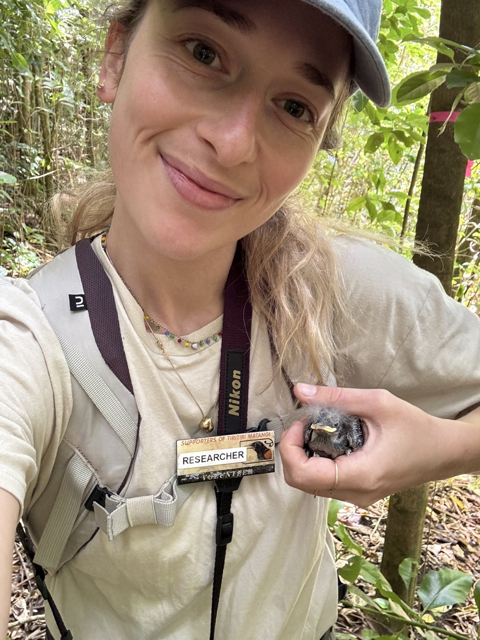
I am passionate about the conservation of endangered species and how species loss impacts people’s lives. My research centres on fighting species extinction by combining theoretical and appliedresearch to promote efficient creative conservation measures. I am spending my exchange in Alejandra Morán Ordoñez’ lab, where I am exploring how diverse approaches to conservation can be combined to address global biodiversity loss. This exchange is also an opportunity to connect with inspiring researchers and broaden my own perspective.
The translocation of endangered species, also referred to as assisted colonisations, is an approach that has taken an increasing importance to address the growing loss of biodiversity and thechallenges posed by climate and global changes. This action has proven successful, particularly for highly threatened and extinct-in-the-wild species, but it is not exempt from risks. Indeed, when a species is introduced in a new habitat, it is added to the local species interaction network and can thus potentially disrupt its balance. Although the risks to the introduced species itself are generally well examined before introduction, there are currently no clear frameworks for the assessments of potential negative impacts on the resident ecosystem.
My PhD project, supervised by PD Dr. Stefano Canessa and co-supervised by Prof. Dr. John G. Ewen (Zoological Society of London), focuses on supporting the IUCN (International Union for the Conservation of Nature) in the production of guidelines for the analysis and mitigation of the risks posed by the translocation of species. My research focuses on the development and the simultaneous testing of these methods on highly threatened species for which introduction is considered / ongoing, namely sihek (Guam kingfisher, Todiramphus cinnamominus) and the boxer pupfish (Cyprinodon simus). Our collaboration with the IUCN SSC Conservation Translocation Specialist Group ensures the resulting guidelines are relevant, applicable, and legitimate. I aim to provide clear and actionable recommendations for conservation practitioners, policymakers, and other stakeholders involved in species introduction and restoration efforts.
Besides my PhD, I participate in other conservation projects and jump on any opportunity for fieldwork. I am always open to potential new collaborations or fieldwork options, so do not hesitate to reach out!