

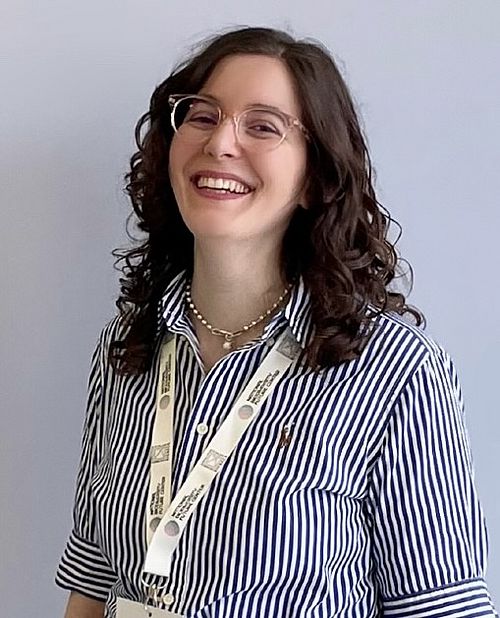
I work at the intersection of ecology and biodiversity governance. Within the PhD program in Science & Policy of the Zurich-Basel PSC, I'm interested in exploring how biodiversity knowledge informs decisions in landscape-scale conservation and restoration under global change, particularly within planning and prioritization processes as they enter governance contexts. I'm drawn to questions about how design choices, scale, uncertainty, and institutional settings influence how ecological knowledge travels into planning and policy. This also means asking whose knowledge is represented, how evidence is interpreted in decision-making, and how modelling tools influence priorities and outcomes both in conservation and restoration. I'm especially keen to explore such dynamics where environmental and biodiversity decisions carry the highest stakes.
My background combines ecological modelling and data-driven approaches with active engagement in biodiversity policy and governance. Before starting my PhD, I worked for three years at the Euro-Mediterranean Center on Climate Change and within the Italian National Biodiversity Future Center, where I studied climate change impacts on forest ecosystems using advanced statistical and machine learning methods. Previously, my research focused on soil biodiversity, analyzing the taxonomic and functional diversity of protist communities in glacier forelands using environmental DNA.
Along a different line of work, I also pursued independent experimental research at the interface of biology, engineering, and open science, which implied designing and building low-cost, modular laboratory equipment using 3D-printing and widely accessible electronic components, as well as developing minimal experimental systems to explore fundamental biological processes. This is what eventually shaped my curiosity around how scientific knowledge is constructed, shared, and made accessible across different contexts, especially in relation to structural and material barriers.
In parallel to my academic endeavors, I'm actively involved in international biodiversity governance. I contribute as a youth delegate to the UN Convention on Biological Diversity and serve as European Coordinator and Steering Committee Member of the Global Youth Biodiversity Network, while also being the appointed representative for youth to the Biodiversa+ Enlarged Stakeholder Board. These roles allow me to engage meaningfully with science-policy processes and advocate for more inclusive transparent, and equitable approaches to biodiversity governance, while also navigating the often slow and complex nature of these processes and their distance from everyday ecological and community realities.
More broadly, I'm concerned about how power, representation, and structural inequalities influence environmental decision-making, including how knowledge is produced, legitimized, and mobilized. This perspective extends to approaches that are attentive to combine multiple knowledge systems in support of more just conservation and restoration practice.
Research interests
• Biodiversity modelling and spatial conservation planning.
• Landscape ecology for biodiversity conservation and restoration under global change.
• Biodiversity governance, science-policy interfaces, and environmental decision-making.
• Participatory and co-design approaches.
• Knowledge politics and bias in biodiversity science.
• Political ecology and environmental justice.
• Open science and accessible research tools.